Hacked by CoupDeGrace
Greetz:
Hmei7, BrokenPipe, SimSimi, L4663r666h05t, AntonKil, d3b~x, Index Php, Mdn_Newbie, Sultan Haikal, Brian Kamikaze
Greetz:
Hmei7, BrokenPipe, SimSimi, L4663r666h05t, AntonKil, d3b~x, Index Php, Mdn_Newbie, Sultan Haikal, Brian Kamikaze
Greetz:
Hmei7, BrokenPipe, SimSimi, L4663r666h05t, AntonKil, d3b~x, Index Php, Mdn_Newbie, Sultan Haikal, Brian Kamikaze
Greetz:
Hmei7, BrokenPipe, SimSimi, L4663r666h05t, AntonKil, d3b~x, Index Php, Mdn_Newbie, Sultan Haikal, Brian Kamikaze
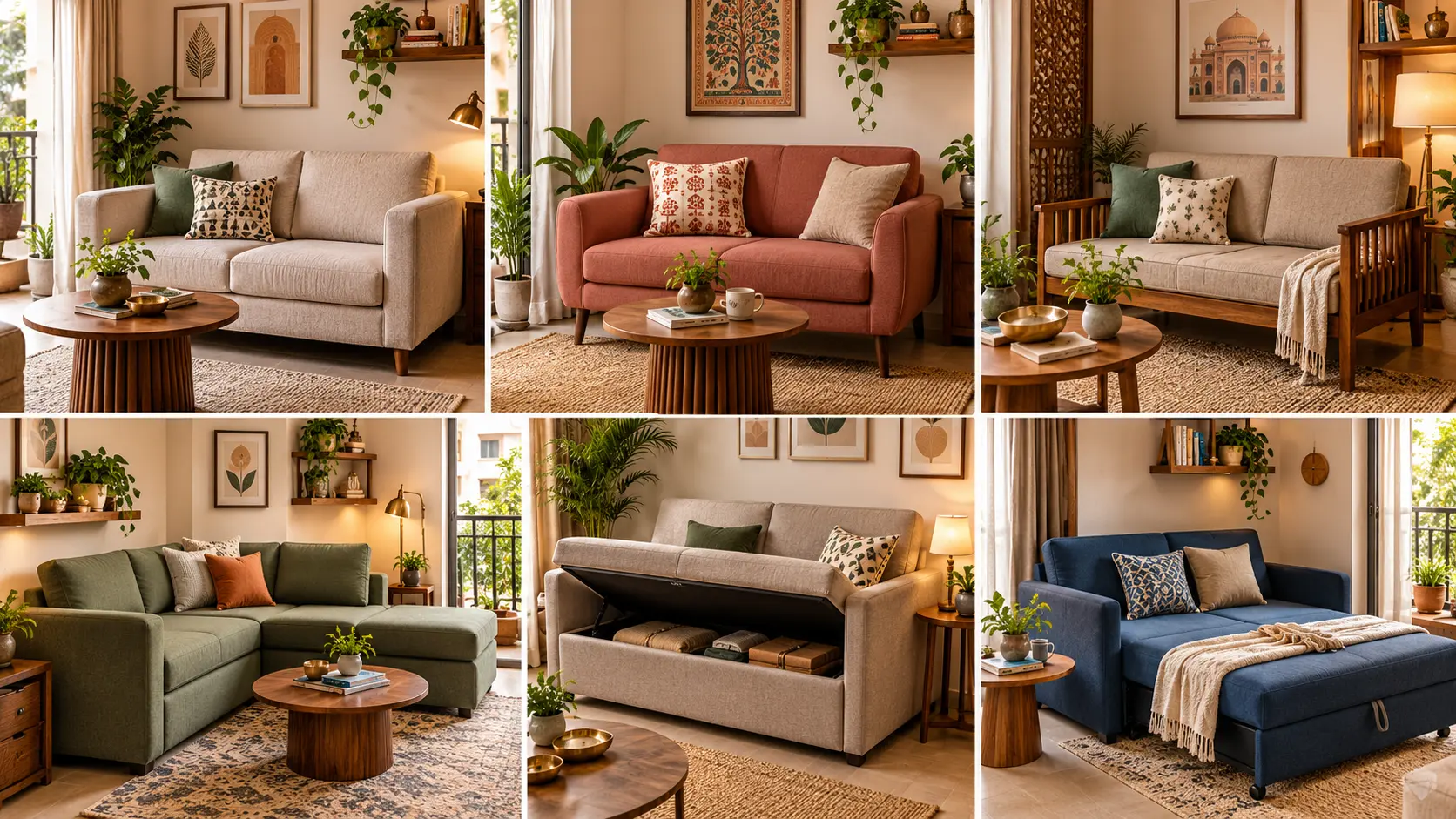
Choosing the best sofa for small living room in India can make a big difference to the comfort, appearance and functionality of your home. In compact apartments, 1 BHK flats and small 2 BHK homes, a bulky sofa can reduce walking space and make the living room feel crowded. The right sofa, however, can provide comfortable seating while helping the room feel organised and spacious.
From compact two-seater sofas and slim-arm designs to L-shaped sofas and multifunctional sofa-cum-beds, there are several options to consider. The best choice depends on your room dimensions, family size, budget, preferred interior style and everyday requirements.
In this guide, we explore 10 sofa styles for small Indian living rooms, explain their benefits and limitations, and share practical tips to help you choose the right design.
The best sofa depends on your available space and how you use your living room. A compact two-seater is a practical choice for very small rooms, while a slim three-seater can accommodate a small family. An L-shaped sofa may work well in a suitable corner, and a sofa-cum-bed is useful when you need occasional sleeping space.
Here are 10 options worth considering:
Compact two-seater sofa
Slim three-seater sofa
Compact L-shaped sofa
Sofa-cum-bed
Wooden-frame sofa
Armless or slim-arm sofa
Modular sofa
Sofa with storage
Loveseat sofa
Minimalist raised-leg sofa
The right design should fit your room without blocking doorways, windows or everyday walking paths.
A compact two-seater sofa is one of the most practical choices for a small living room. It provides comfortable seating for two people without occupying as much floor space as a large sofa set.
This design works particularly well in studio apartments, 1 BHK flats, small living rooms and homes where the seating area shares space with a dining area.
Choose a model with slim armrests, a moderate seat depth and a simple silhouette. These features can help you preserve usable seating space without making the sofa look oversized.
Why choose it?
Suitable for compact apartments and smaller rooms.
Easier to arrange around a TV unit or coffee table.
Available in contemporary, wooden and upholstered styles.
Can be paired with a small accent chair or ottoman.
Best for: Couples, small households and compact 1 BHK homes.
If you need additional seating, a slim three-seater sofa may be a better option than a large sectional. It provides room for family members and guests while maintaining a straightforward furniture arrangement.
Look for a design with narrow armrests, a relatively compact depth and a supportive backrest. Avoid oversized cushions and bulky side panels if your living room has limited floor space.
Before purchasing, compare the sofa’s complete dimensions with the usable wall length and the space available in front of it.
Why choose it?
Offers more seating than a typical two-seater.
Works well against a longer living room wall.
Available in a wide range of fabrics and finishes.
Can serve as the main seating piece in a small family home.
Best for: Small families who regularly use their living room together.
An L-shaped sofa can be an effective choice when your living room has a suitable corner. Its connected seating arrangement makes use of the corner and may eliminate the need for separate seating pieces.
However, not every small room can accommodate an L-shaped sofa comfortably. Measure the main sofa section and the chaise or return section separately. Also check whether the design blocks the balcony entrance, a window or the main walking path.
A compact model with a reversible chaise can provide additional layout flexibility if the manufacturer supports both configurations.
Why choose it?
Uses a suitable corner efficiently.
Creates a defined seating area.
Provides multiple seating positions.
Can work well in open-plan living and dining spaces.
Best for: Small rectangular rooms with an available corner.
A sofa-cum-bed combines seating and sleeping functions in one piece of furniture. It can be particularly useful when your living room doubles as a guest room or you do not have a separate bedroom for visitors.
Some designs fold out into a sleeping surface, while others use a pull-out mechanism or a convertible backrest. Check the dimensions in both the sofa and bed configurations before buying.
Pay attention to the opening mechanism, mattress or cushion support, fabric maintenance and the amount of floor space required when the bed is extended.
Why choose it?
Combines two functions in one piece of furniture.
Useful for guests and occasional overnight stays.
Can reduce the need for additional furniture.
Available in different contemporary styles.
Best for: Studio apartments, rented flats and multifunctional living rooms.
A wooden-frame sofa can complement Indian homes with modern, traditional or minimalist interiors. Designs with exposed wooden arms and legs often have a lighter visual appearance than heavily upholstered models.
Wooden sofas are available in different finishes, upholstery options and seating configurations. When comparing products, examine the frame construction, joinery, cushion quality, warranty and maintenance requirements.
Do not choose a sofa based on its frame material alone. Comfort and overall construction are equally important.
Why choose it?
Complements a variety of interior design styles.
Can add warmth and natural texture to a room.
Available with upholstered or removable cushions.
Works well with wooden TV units and coffee tables.
Best for: Homeowners who prefer natural materials and timeless furniture.
Armrests can significantly affect the overall width of a sofa. In a compact living room, a design with slim arms or no arms may provide more usable seating within a similar footprint.
An armless sofa also creates a simpler visual profile, which can be helpful in a narrow room. However, consider how you prefer to sit and whether you need arm support for everyday relaxation.
Choose upholstery and cushions that complement your existing furniture rather than adding too many contrasting elements.
Why choose it?
Reduces bulky visual details.
Can provide more seating width for the overall footprint.
Works well with minimalist and contemporary interiors.
Can be paired with a separate side table.
Best for: Narrow living rooms and homes with a minimalist design preference.
A modular sofa consists of separate sections that can be combined in different arrangements, depending on the design. This flexibility can be useful in apartments where furniture layouts may change over time.
For a small living room, consider a compact configuration rather than purchasing every available section. Check the total width and depth of the assembled sofa, the stability of the connecting mechanism and whether additional modules are available later.
A modular sofa can also be useful if you expect to move to a different home in the future, provided the modules suit the new space.
Why choose it?
Allows flexible seating arrangements.
Can adapt to different room layouts.
Some systems allow additional modules to be purchased.
Offers a contemporary appearance.
Best for: People who prefer adaptable furniture and flexible room layouts.
A storage sofa can help reduce clutter by providing a place to keep blankets, cushions, toys or other household items. Depending on the model, the storage compartment may be located beneath the seat or inside a built-in drawer.
This can be useful in homes where wardrobes and cabinets are already full. Before buying, check how the storage opens, how much usable capacity it offers and whether the mechanism is easy to operate.
Avoid placing frequently used items inside a compartment that is difficult to access.
Why choose it?
Adds concealed storage to the seating area.
Helps organise selected household items.
Can reduce the need for separate storage furniture.
Useful in multifunctional apartments.
Best for: Small homes that need additional everyday storage.
A loveseat is a compact sofa designed primarily for two people. Although it is similar to a two-seater, the term often describes smaller or more decorative seating styles.
A loveseat can be placed against a wall, near a window or in a small conversation area. It can also work alongside a single accent chair when you need occasional extra seating without introducing another full-size sofa.
Check the actual width and depth because loveseat dimensions vary considerably between manufacturers.
Why choose it?
Suitable for small seating areas.
Offers a compact and decorative appearance.
Works with accent chairs and small side tables.
Available in classic, contemporary and upholstered styles.
Best for: Couples, studio apartments and secondary seating areas.
A raised-leg sofa leaves some visible floor space beneath the seat. This can make the furniture appear less visually heavy than a design with a solid base extending to the floor.
Minimalist raised-leg sofas are available in wooden, metal and upholstered designs. They can work particularly well in contemporary apartments with light-coloured walls and simple furniture.
Remember that raised legs do not automatically make a sofa smaller. Compare the actual dimensions and ensure the frame and legs are stable enough for everyday use.
Why choose it?
Creates a lighter visual profile.
Makes more of the floor visible beneath the sofa.
Complements minimalist and Scandinavian-inspired interiors.
Can coordinate with slim coffee tables and open shelving.
Best for: Small living rooms where you want an uncluttered appearance.
Finding the best sofa for small living room in India is about balancing comfort, dimensions, design and functionality. A compact two-seater may be ideal for one household, while a slim three-seater, modular design or sofa-cum-bed may suit another.
Measure your living room, identify your everyday needs and compare the complete dimensions before making a decision. A well-proportioned sofa, combined with thoughtful furniture placement and practical storage, can help make even a compact living room more comfortable and attractive.
Explore suitable sofa options, compare product specifications and choose a design that complements your home and budget.
A compact two-seater is a practical choice for very small rooms. A slim three-seater may suit a small family, while a compact L-shaped sofa can work well in a suitable corner. The best option depends on your room measurements and seating needs.
A two-seater is often suitable for a compact 1 BHK or studio apartment because it generally occupies less space than a larger sofa. However, a proportionate three-seater may be more useful if several family members need to sit together regularly.
Yes, if the room has a suitable corner and enough space for both sections. Measure the sofa carefully and ensure that it does not block doors or walking paths.
Beige, cream, light grey and other neutral shades can help create a cohesive, airy appearance. Darker colours are also suitable when balanced with the room’s lighting and overall colour scheme.
Compact two-seaters, slim-arm sofas, sofa-cum-beds and appropriately sized storage sofas are useful options. Choose based on whether your main requirement is seating, sleeping space or storage.
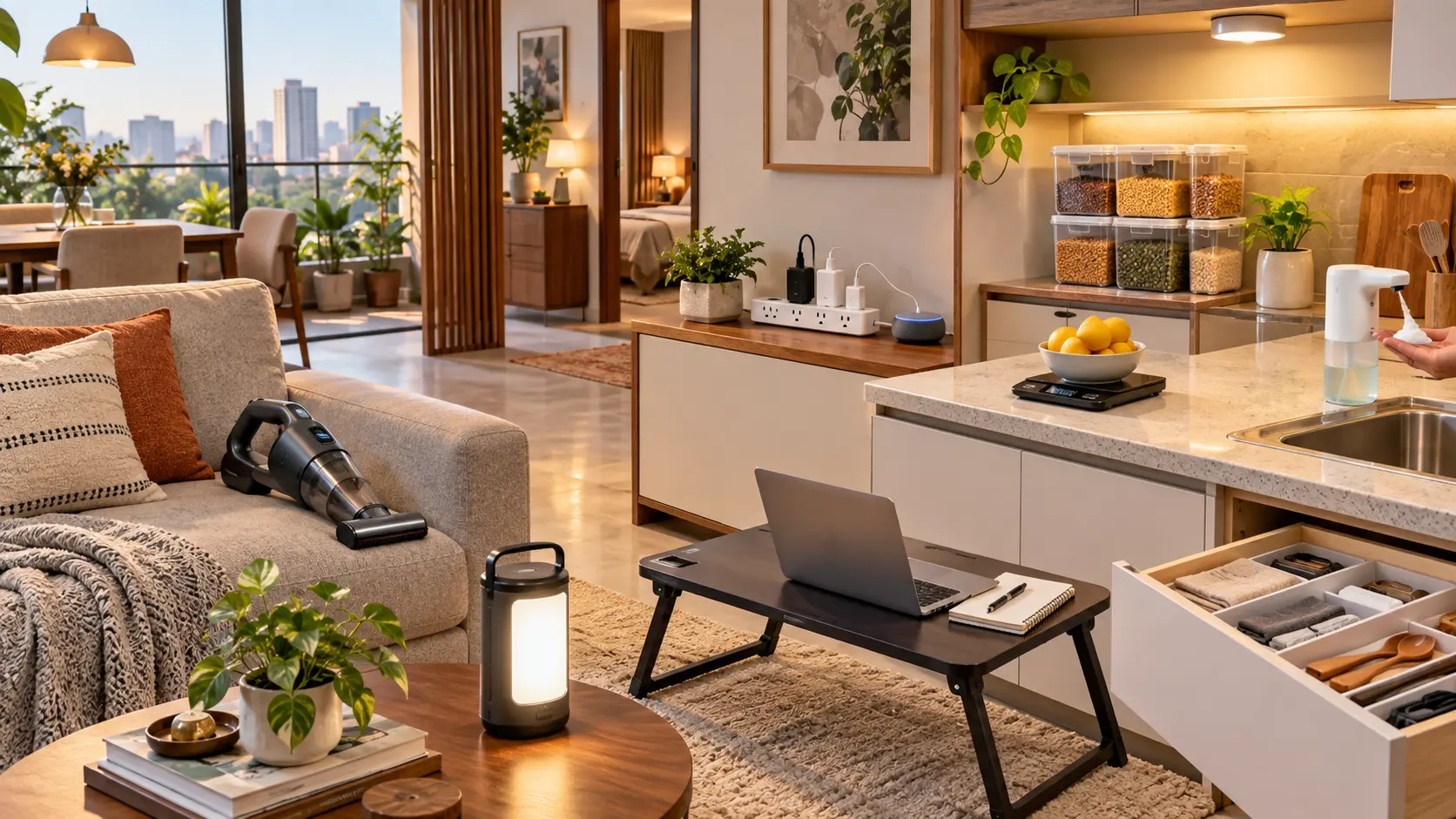
Modern homes are becoming smarter, more organised and easier to maintain. But you do not need expensive renovations or complicated technology to improve your daily routine.
A few practical home products can help you save space, reduce cleaning time, improve comfort and make everyday tasks easier.
If you are setting up a new home, renovating an apartment or simply looking for useful upgrades, here are 10 smart home products worth considering in 2026.
Some of the most useful products for modern homes include:
The best product depends on your home’s size, daily routine and budget.
Motion-sensor lights automatically switch on when movement is detected.
They are especially useful for wardrobes, staircases, kitchens, hallways and bathrooms.
You don’t have to search for switches at night, and the light automatically turns off when it is no longer required.
Small apartments, wardrobes, kitchens and homes with children or elderly family members.
Product Tip: Choose a rechargeable version with adjustable brightness.
A large vacuum cleaner is not always practical for quick cleaning.
A compact cordless vacuum can help clean sofas, beds, cars, corners and small spills within minutes.
It is lightweight, portable and easier to use for everyday cleaning.
Apartments, pet owners, families with children and people who prefer quick daily cleaning.
Storage is one of the biggest challenges in modern apartments.
Stackable organisers can be used inside kitchens, bathrooms, wardrobes and utility areas.
They utilise vertical space and prevent everyday items from creating clutter.
Choose organisers in similar colours to maintain a clean and coordinated look.
An automatic soap dispenser provides soap without requiring physical contact.
It can be useful in kitchens and bathrooms where hygiene is important.
Modern homes often have several devices but limited electrical sockets.
A good extension board provides multiple charging points from a single power connection.
Choose models with overload protection, USB charging ports and individual switches where possible.
Safety Tip: Never overload electrical extension boards beyond their rated capacity.
A well-designed shower head can provide comfortable water flow while helping control water usage.
This makes it particularly useful for households looking to reduce unnecessary water consumption.
Apartments, rented homes and budget-friendly bathroom upgrades.
A digital kitchen scale is useful for people who cook frequently, bake or manage food portions.
It provides more accurate measurements than estimating ingredients manually.
It is compact, affordable and requires very little storage space.
With work-from-home and hybrid working becoming common, a compact laptop table can be a useful addition to smaller homes.
A foldable design allows you to store it easily when it is not required.
Students, professionals, small bedrooms and studio apartments.
One of the simplest ways to make a kitchen or wardrobe feel organised is by dividing drawers into sections.
Drawer organisers work well for:
Measure your drawer before purchasing an organiser to ensure the correct fit.
Power interruptions can happen unexpectedly.
A rechargeable emergency light provides convenient backup lighting without requiring candles or disposable batteries.
Look for good battery backup, adjustable brightness and portable construction.
Start with a product that solves an actual daily problem.
For example:
| Your Problem | Useful Product |
|---|---|
| Dark wardrobes or corridors | Motion-sensor light |
| Limited storage | Stackable organiser |
| Frequent small messes | Cordless vacuum |
| Too few charging points | Extension board |
| Work-from-home setup | Foldable laptop table |
| Messy drawers | Drawer organiser |
| Power interruptions | Rechargeable light |
Rather than buying several products at once, focus on one improvement at a time.
Before purchasing any home product, consider four factors.
Avoid buying products simply because they are trending. Choose something that solves an everyday problem.
Measure the installation or storage area before ordering furniture, organisers or appliances.
Products that are difficult to clean or maintain often stop being useful after a few months.
Check recent customer experiences, product specifications and warranty information before making a final decision.
A smarter home does not always require expensive technology or a complete renovation.
Small improvements such as better storage, convenient lighting, easier cleaning tools and multifunctional accessories can significantly improve everyday living.
Focus on products that solve genuine problems in your home rather than purchasing items only because they are popular.
With thoughtful choices, even a compact apartment can become more organised, comfortable and efficient.
Storage organisers, extension boards, motion-sensor lights, cleaning devices and kitchen accessories are among the most practical products for a new home.
Foldable furniture, vertical storage organisers, compact cleaning equipment and multifunctional products work particularly well in small apartments.
Start with portable upgrades such as automatic lights, charging solutions, storage systems and smart everyday accessories. These improvements usually require little or no structural modification.
No. A useful product should primarily solve a real problem, offer reasonable durability and fit your available space and budget.
Check dimensions, materials, specifications, warranty information, return conditions and recent customer reviews before purchasing.
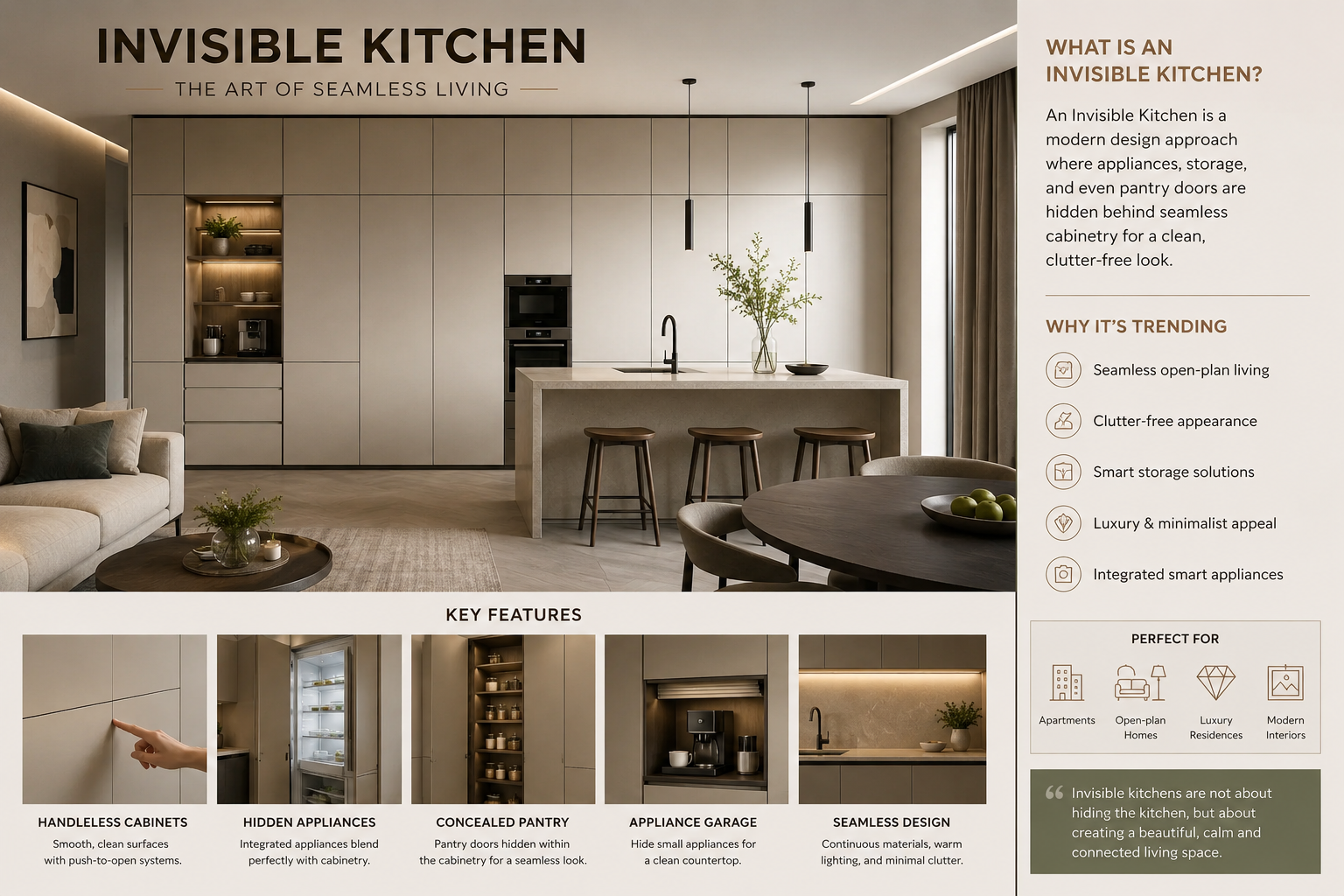
An Invisible Kitchen is a modern kitchen design where appliances, storage, and even pantry doors are hidden behind seamless cabinetry. It creates a clean, clutter-free appearance that blends with the living space while maintaining full functionality. This design trend is popular in luxury homes, apartments, and open-plan interiors because it combines minimalism with smart storage.
The kitchen has evolved beyond being just a cooking space. In today’s homes, especially with open-plan layouts, it has become an extension of the living and dining area. This shift has given rise to one of the biggest interior design trends of 2026—the Invisible Kitchen.
An Invisible Kitchen is designed to blend seamlessly with the rest of the home by hiding appliances, minimizing visual clutter, and creating a clean, elegant look. Instead of displaying every appliance and utensil, the design focuses on concealed storage, integrated technology, and minimalist aesthetics. As more homeowners seek calm, organized interiors, this trend is gaining popularity worldwide.
An Invisible Kitchen is a modern kitchen concept where most functional elements are hidden behind custom cabinetry. Refrigerators, dishwashers, microwaves, coffee machines, and even pantry doors are concealed using matching cabinet panels. The result is a sophisticated space that resembles a stylish living room rather than a traditional kitchen.
This design works particularly well in apartments, luxury homes, and open-plan interiors where visual harmony is important.
Open layouts have become increasingly popular, making the kitchen visible from every angle. Homeowners now prefer kitchens that complement their living spaces instead of dominating them.
Hidden storage solutions keep countertops clean and organized, creating a peaceful and luxurious atmosphere.
Modern appliances are designed to blend into cabinetry while maintaining full functionality, allowing technology to stay discreet.
Invisible kitchens create a premium look often found in luxury residences, boutique hotels, and designer homes.
These features help maintain a clean visual flow while keeping the kitchen highly functional.
Warm whites, beige, taupe, oak, walnut, and soft grey shades create a timeless appearance.
Store toasters, blenders, and coffee makers inside appliance garages to keep countertops clear.
Matching cabinet panels help refrigerators and dishwashers disappear into the design.
Floor-to-ceiling cabinets provide generous storage while maintaining a sleek aesthetic.
Combine ambient, task, and accent lighting to create warmth without adding visual clutter.
This design style is ideal if you:
However, achieving this look requires thoughtful planning, custom cabinetry, and careful integration of appliances.
The Invisible Kitchen is more than a passing trend—it reflects the way modern homeowners want to live. By combining hidden storage, integrated appliances, and elegant materials, this design creates a calm and functional environment without sacrificing style.
Whether you’re renovating your home or designing a new kitchen, the Invisible Kitchen offers a timeless solution that balances beauty, practicality, and modern living.
An Invisible Kitchen is a kitchen designed with concealed appliances, hidden storage, and seamless cabinets to create a sleek and minimalist appearance.
Invisible Kitchens are popular because they reduce visual clutter, improve organization, maximize space, and create a luxurious modern look that complements open-plan homes.
The key features include:
Invisible Kitchens generally cost more than traditional kitchens because they require custom cabinetry, integrated appliances, and premium finishes. However, they can increase the home’s visual appeal and long-term value.
Yes. They are especially suitable for apartments and compact homes because hidden storage makes the space appear larger and more organized.
Popular materials include natural wood veneer, matte laminate, quartz, engineered stone, porcelain slabs, glass, and textured finishes.
Yes. Most Invisible Kitchens feature built-in refrigerators, ovens, dishwashers, induction cooktops, and smart lighting systems integrated behind cabinetry.
Warm white, beige, greige, taupe, walnut, oak, charcoal grey, and soft earthy tones are among the leading color choices.
Yes. Its seamless appearance allows the kitchen to blend naturally with dining and living spaces, making it ideal for open-plan homes.
Regularly clean cabinet surfaces, organize hidden storage, maintain integrated appliances, and avoid overcrowding cabinets to preserve its minimalist appearance.

Smart home gadgets in 2026 use artificial intelligence and IoT technology to improve home security, convenience, and energy efficiency. The most recommended devices include AI security cameras, smart video doorbells, robot vacuum cleaners, smart speakers, lighting systems, smart locks, thermostats, air purifiers, and connected kitchen appliances. These devices automate daily tasks, reduce energy costs, and create a safer, more connected home environment.
Smart homes are no longer a luxury reserved for tech enthusiasts. In 2026, artificial intelligence, voice assistants, and connected devices have made smart home technology more affordable, practical, and user-friendly than ever before. From improving home security to reducing electricity bills and simplifying everyday tasks, smart gadgets are becoming an essential part of modern living.
Whether you’re moving into a new house, renovating your apartment, or simply looking to upgrade your lifestyle, investing in the right smart home devices can make your home safer, more energy-efficient, and significantly more comfortable. The latest generation of smart gadgets uses AI to learn your habits, automate daily routines, and provide real-time control from your smartphone or voice assistant.
If you’re wondering which smart home devices are actually worth buying in 2026, this guide covers the top gadgets that offer the best value, convenience, and long-term benefits.
The rapid growth of artificial intelligence and the Internet of Things (IoT) has transformed how people interact with their homes. Instead of manually switching lights on or checking security cameras while away, homeowners can now automate almost every aspect of their living space.
Smart home technology has also become more compatible across brands, allowing devices such as lights, locks, speakers, cameras, and appliances to work together seamlessly. This connected ecosystem saves time, improves security, and helps homeowners manage energy consumption more efficiently.
As electricity costs continue to rise and remote work becomes more common, people are increasingly investing in technology that enhances convenience while reducing long-term household expenses.
Home security remains one of the biggest reasons homeowners invest in smart technology. Modern AI-powered security cameras can distinguish between people, pets, vehicles, and packages, reducing false alerts and providing more accurate notifications.
Many models now offer facial recognition, night vision, two-way communication, cloud storage, and real-time mobile alerts. Whether you’re at work or on vacation, you can monitor your property directly from your smartphone.
These cameras are particularly useful for protecting entrances, garages, gardens, and driveways while providing peace of mind around the clock.
Smart video doorbells have become an essential addition to modern homes. They allow homeowners to see, hear, and speak to visitors even when they are away.
In 2026, many smart doorbells include AI-powered package detection, motion alerts, facial recognition, and high-definition video recording. They also integrate with smart locks and security systems, creating a complete entrance security solution.
For online shoppers who frequently receive deliveries, a smart doorbell provides added security and convenience.
Lighting has evolved far beyond simple on-and-off switches. Smart lighting systems allow homeowners to control brightness, color temperature, and scheduling through voice commands or mobile apps.
You can create different lighting scenes for relaxing, working, watching movies, or entertaining guests. Motion sensors can automatically switch lights on when someone enters a room and turn them off when the room is empty, helping reduce electricity consumption.
Many smart bulbs also synchronize with music, gaming systems, and televisions, creating immersive experiences throughout the home.
Cleaning technology has improved dramatically in recent years. Modern robot vacuums now combine vacuuming and mopping into a single automated device.
Using AI-powered mapping technology, these robots learn the layout of your home, avoid obstacles, detect carpets, and automatically return to their charging stations after completing cleaning tasks.
Busy families, pet owners, and working professionals can maintain cleaner homes with minimal effort.
Voice-controlled smart speakers have become the central hub of many smart homes. They can answer questions, play music, manage calendars, control lighting, operate security devices, and automate daily routines using simple voice commands.
Modern AI assistants are becoming more conversational and context-aware, making interactions feel increasingly natural.
With one command, homeowners can switch off every light, lock the doors, and activate nighttime security mode.
Traditional keys are gradually being replaced by smart locks that offer keyless entry using smartphones, fingerprints, PIN codes, or temporary digital access.
Homeowners can remotely unlock doors for guests, monitor entry logs, and receive notifications whenever someone enters or leaves the property.
Smart locks are particularly useful for Airbnb hosts, rental properties, and families with children.
Energy efficiency is becoming a priority in modern homes. Smart thermostats automatically learn your heating and cooling preferences while adjusting temperatures based on occupancy and weather conditions.
This automation helps reduce electricity consumption without sacrificing comfort.
Many homeowners report noticeable savings on monthly energy bills after installing smart climate control systems.
The kitchen is becoming one of the smartest rooms in the home. Connected coffee makers, refrigerators, ovens, microwaves, and air fryers allow users to control appliances remotely using mobile apps.
Some refrigerators can even monitor food inventory, suggest recipes, and notify homeowners when groceries are running low.
These intelligent appliances save time while making meal preparation more convenient.
Indoor air quality has become increasingly important, especially in urban environments. Smart air purifiers continuously monitor pollution levels and automatically adjust purification settings based on air quality.
Many devices also track humidity, allergens, and airborne particles while providing detailed reports through smartphone apps.
Families with allergies, pets, or respiratory concerns can benefit significantly from automated air purification systems.
Smart plugs are one of the simplest and most affordable ways to start building a smart home.
By connecting ordinary appliances to Wi-Fi, smart plugs allow users to schedule devices, monitor electricity usage, and control appliances remotely.
Table lamps, coffee machines, fans, televisions, and decorative lighting can all become smart without replacing existing equipment.
Before buying smart home devices, consider compatibility with your preferred voice assistant or ecosystem. Choosing products that work together ensures smoother automation and easier control.
It’s also important to prioritize security features, software updates, and reliable customer support. Investing in trusted brands often provides better long-term performance and stronger privacy protection.
Rather than purchasing every gadget at once, start with devices that solve your most immediate needs, such as security cameras, smart lighting, or a robot vacuum. Over time, you can gradually expand your smart home ecosystem.
Smart home technology in 2026 is more intelligent, accessible, and practical than ever before. Whether your goal is improving home security, saving energy, automating daily tasks, or simply making life more convenient, today’s smart gadgets offer solutions for every budget and lifestyle.
Instead of viewing smart devices as luxury purchases, many homeowners now see them as long-term investments that improve comfort, efficiency, and peace of mind. By choosing reliable products that integrate seamlessly with your existing devices, you can build a connected home that is ready for the future.
The best smart home gadgets include AI security cameras, robot vacuums, smart lighting systems, video doorbells, smart locks, smart speakers, smart thermostats, air purifiers, smart kitchen appliances, and smart plugs.
Yes. Smart home devices improve security, save energy, automate everyday tasks, and make homes more convenient while offering long-term cost savings.
Smart thermostats, smart lighting systems, and smart plugs are among the most effective devices for reducing electricity consumption through automation and scheduling.
Yes. Most modern smart devices support common ecosystems such as Google Home, Amazon Alexa, and Apple Home, allowing them to communicate and automate tasks together.
Smart homes can be secure when users choose trusted brands, enable two-factor authentication, use strong passwords, and regularly install firmware updates.

Found Luxury is an interior design trend that focuses on creating elegant, personalized homes using vintage furniture, handcrafted décor, natural materials, and meaningful objects instead of expensive, mass-produced products. The trend values sustainability, quality craftsmanship, and individuality over traditional luxury.
Luxury is no longer defined by expensive furniture, designer labels, or perfectly coordinated interiors. In 2026, homeowners are embracing a more personal and meaningful way of decorating known as Found Luxury. This interior design trend focuses on creating beautiful spaces by blending vintage furniture, handcrafted accessories, natural materials, and treasured personal items. Instead of buying everything brand new, people are choosing pieces that tell a story, reflect their personality, and make their homes feel warm and authentic.
Found Luxury proves that true elegance doesn’t come from spending more—it comes from choosing items with character, quality, and emotional value. Whether it’s a reclaimed wooden dining table, a handmade ceramic vase, or a family heirloom passed down through generations, every object contributes to a home that feels unique and lived-in rather than staged.
The popularity of Found Luxury reflects changing lifestyles and priorities. After years of minimalist interiors dominated by matching furniture and neutral color palettes, homeowners are looking for spaces that feel more comfortable, welcoming, and personal. Today’s homes are expected to support daily life while expressing the personality of the people who live in them.
At the same time, sustainability has become a major influence on home design. Many people now prefer restoring old furniture or buying vintage pieces instead of purchasing mass-produced products. Choosing reclaimed wood, handcrafted décor, and locally made accessories not only reduces environmental impact but also creates interiors with greater character and lasting appeal. This combination of sustainability, individuality, and timeless design has made Found Luxury one of the most influential interior trends of 2026.
A Found Luxury home doesn’t follow strict decorating rules. Instead, it combines different styles, textures, and materials in a way that feels natural and collected over time. A contemporary sofa can be paired with an antique coffee table, while handcrafted pottery sits comfortably beside modern artwork. These thoughtful contrasts create depth and personality, making every room feel distinctive rather than identical to a showroom.
Natural materials play an important role in this trend. Solid wood furniture, linen fabrics, marble surfaces, woven baskets, leather accents, and handcrafted ceramics add warmth and texture that synthetic materials often lack. As these materials age, they develop even more character, making the home feel richer and more inviting over time.
Another defining feature of Found Luxury is meaningful decoration. Rather than filling shelves with trendy accessories, homeowners display travel souvenirs, family photographs, vintage books, handmade artwork, or locally crafted pieces. Every object has a purpose or a story, transforming the home into a reflection of personal experiences instead of simply following design trends.
Creating a Found Luxury home doesn’t require a complete renovation or a large budget. The best approach is to start with one quality statement piece, such as a reclaimed wood dining table, an antique cabinet, or a vintage mirror. From there, gradually add complementary items instead of buying an entire matching furniture set. This layered approach makes the space feel authentic and naturally curated.
Adding handcrafted accessories is another simple way to embrace this style. Handmade pottery, woven baskets, artisan lighting, embroidered cushions, and locally produced artwork instantly add personality to any room. These details celebrate craftsmanship while supporting local artists and small businesses.
Color choices also contribute to the Found Luxury aesthetic. Warm neutrals like beige, cream, taupe, terracotta, olive green, and chocolate brown create a calm, welcoming atmosphere. These earthy tones work beautifully with wood, stone, and natural fabrics, allowing every decorative piece to stand out without overwhelming the space.
Interior designers appreciate Found Luxury because it encourages homeowners to create spaces that are both beautiful and functional. Rather than chasing short-lived trends, this approach focuses on timeless design and thoughtful purchasing decisions. Homes decorated in this style tend to age gracefully because they rely on quality materials and meaningful collections instead of seasonal décor.
Found Luxury also offers incredible flexibility. It works equally well in apartments, villas, modern homes, and traditional houses. Whether your style leans toward Scandinavian, rustic, contemporary, industrial, or classic interiors, vintage and handcrafted pieces can easily be incorporated to add warmth and individuality.
Most importantly, this trend reminds homeowners that perfection isn’t necessary. A home should feel lived in, comfortable, and welcoming—not like a furniture showroom. Small imperfections, aged wood, handcrafted textures, and collected treasures all contribute to the beauty of the space.
One of the biggest advantages of Found Luxury is that it can be surprisingly affordable. Many beautiful vintage pieces are available at antique markets, flea markets, estate sales, second-hand stores, and online marketplaces. Refinishing an old wooden cabinet or restoring a vintage chair often costs less than buying new designer furniture while providing far more character and craftsmanship.
Instead of replacing everything at once, homeowners can slowly build their interiors over time. This thoughtful approach not only saves money but also results in a home that feels more authentic and personal.
Found Luxury is more than just another interior design trend—it’s a shift toward creating homes that value authenticity, sustainability, and individuality. By mixing vintage furniture, handcrafted décor, natural materials, and meaningful personal collections, homeowners can design spaces that feel elegant without relying on expensive designer brands.
As we move through 2026, homes are becoming less about perfection and more about personality. Found Luxury encourages us to buy thoughtfully, decorate with intention, and appreciate the stories behind the things we own. In a world filled with mass-produced products, this trend reminds us that the most luxurious home is one that truly feels like our own.
Found Luxury is an interior design style that combines vintage furniture, handcrafted décor, natural materials, and personal collections to create elegant, meaningful living spaces.
It reflects growing interest in sustainable living, timeless craftsmanship, and homes that showcase individuality instead of mass-produced designs.
Yes. Shopping at thrift stores, antique markets, and local artisan shops allows you to build a stylish home without spending a fortune.
Warm neutrals like cream, beige, terracotta, olive green, taupe, and chocolate brown work best because they create a cozy and timeless atmosphere.
Absolutely. Even a few carefully chosen vintage or handcrafted pieces can add warmth, personality, and sophistication to a compact living space.

Interior design in 2026 is all about balance between comfort, technology, and nature. Homes are no longer just living spaces—they are becoming personal wellness zones, smart environments, and style statements.
From minimalist aesthetics to eco-friendly materials, the way we design homes is evolving rapidly. If you are planning to renovate or design your home this year, knowing the latest trends can help you create a space that feels modern, functional, and timeless.
One of the strongest trends in 2026 is biophilic interior design, which focuses on connecting indoor spaces with nature.
🌱 Why it’s trending:
People are prioritizing mental health, and natural elements reduce stress and improve well-being.
Architects & Interior Designers In Mumbai
Minimalism is still trending, but in 2026 it has evolved into functional minimalism.
💡 Pro Tip:
Instead of empty spaces, focus on purposeful design—every item should serve a function.
Technology is transforming modern homes into smart living ecosystems.
📱 Why it matters:
Convenience and energy efficiency are becoming top priorities for homeowners.
While neutral tones dominate, 2026 brings back bold accent colors.
🎯 Design tip:
Use bold colors in furniture, cushions, or one feature wall—not the entire room.
Sustainability is no longer optional—it’s essential.
🌍 Trend insight:
Homeowners now prefer long-lasting, environmentally responsible materials over fast decor.
Sharp edges are fading out. 2026 is about soft, curved aesthetics.
🧠 These designs create a calming, flow-friendly environment.
Due to compact urban living, homes are becoming multi-purpose spaces.
📌 Smart zoning is key to maintaining functionality without overcrowding.
Here are outdated design styles:
❌ Overly industrial heavy metal designs
❌ Excess cluttered décor
❌ Pure all-white sterile rooms
❌ Matching furniture sets (too uniform look)
❌ Over-decorated walls
Modern interior design in 2026 is about creating smart, sustainable, and emotionally comfortable spaces. Whether you prefer minimalism or luxury, the key is to design a home that reflects your personality while staying functional and future-ready.
If you are planning a home makeover, start by combining natural elements, smart technology, and personalized design choices.Modern Interior Design Trends 2026: What’s In and What’s Out

A color palette in interior design is a curated set of colors used consistently across a room or entire home to create visual harmony, mood, and a cohesive aesthetic. Choosing the right color palette is one of the most important decisions in any interior design project — it affects how a space feels, looks, and functions every single day.
Whether you are designing a living room, bedroom, kitchen, or office, the colors you choose will define the entire atmosphere of that space.
Colors have a direct psychological impact on how we feel in a space. Research in environmental psychology shows that:
A well-chosen color palette can make a small room feel larger, a dark space feel brighter, and a chaotic area feel more organized.
To choose the right color palette for your home interior, follow these five steps:
The 60-30-10 rule is a classic interior design principle that helps create balanced color schemes. Here is how it works:
Example: A living room with soft grey walls (60%), navy blue sofa and curtains (30%), and gold or mustard yellow accessories (10%).
Light and cool colors make a room look bigger. The best colors to make a small room appear larger include:
Avoid dark, saturated colors on all four walls in small rooms as they absorb light and make spaces feel enclosed.
A well-balanced room typically uses 3 to 5 colors. More than five colors can feel chaotic and uncoordinated. A simple and effective approach is:
Before picking any colors, ask yourself: How do I want this room to feel?
| Mood | Recommended Colors |
|---|---|
| Calm & Relaxing | Soft blue, lavender, sage green, warm white |
| Energetic & Vibrant | Orange, yellow, coral, bright teal |
| Luxurious & Elegant | Deep navy, emerald green, burgundy, gold |
| Fresh & Minimal | White, light grey, pale wood tones |
| Cozy & Warm | Terracotta, warm brown, burnt orange, cream |
You do not always start from scratch. Look at what you already have in the room:
These elements should guide your palette. Pick colors that complement rather than clash with these fixed points.
Every color has an undertone — a subtle secondary hue beneath the surface. This is why “white” is never just white. Common undertones include:
Always check the undertone of your chosen colors against each other. Mixing a warm white with a cool grey can create an unintentional clash.
The color wheel is your best friend in palette creation. Here are the most common color schemes based on the wheel:
Lighting dramatically changes how colors appear. Before finalising your palette:
Never choose a color from a small chip alone. Here is how to test properly:
The living room is the heart of the home — a space for relaxation and social gathering. Best choices:
The bedroom should promote rest and calm. Best choices:
Kitchens benefit from energizing, clean-feeling colors. Best choices:
Bathrooms are the ideal space for spa-inspired palettes. Best choices:
Color can improve focus and productivity at home. Best choices:
Indian homes are seeing a shift toward:
At Makan Interio, we understand that choosing the right color palette is both a science and an art. Our experienced interior designers in India help you:
Whether you are renovating a single room or designing an entire home, our team brings expertise, creativity, and attention to detail to every project.
Ready to transform your space? Contact Makan Interio today for a free color consultation.
Looking for expert interior design services in India? Visit makaninterio.com for portfolio, services, and consultation bookings.
Tags: interior design color palette, how to choose room colors, color scheme for home, 60-30-10 rule interior design, best colors for living room, bedroom color ideas India, interior design tips India, Makan Interio