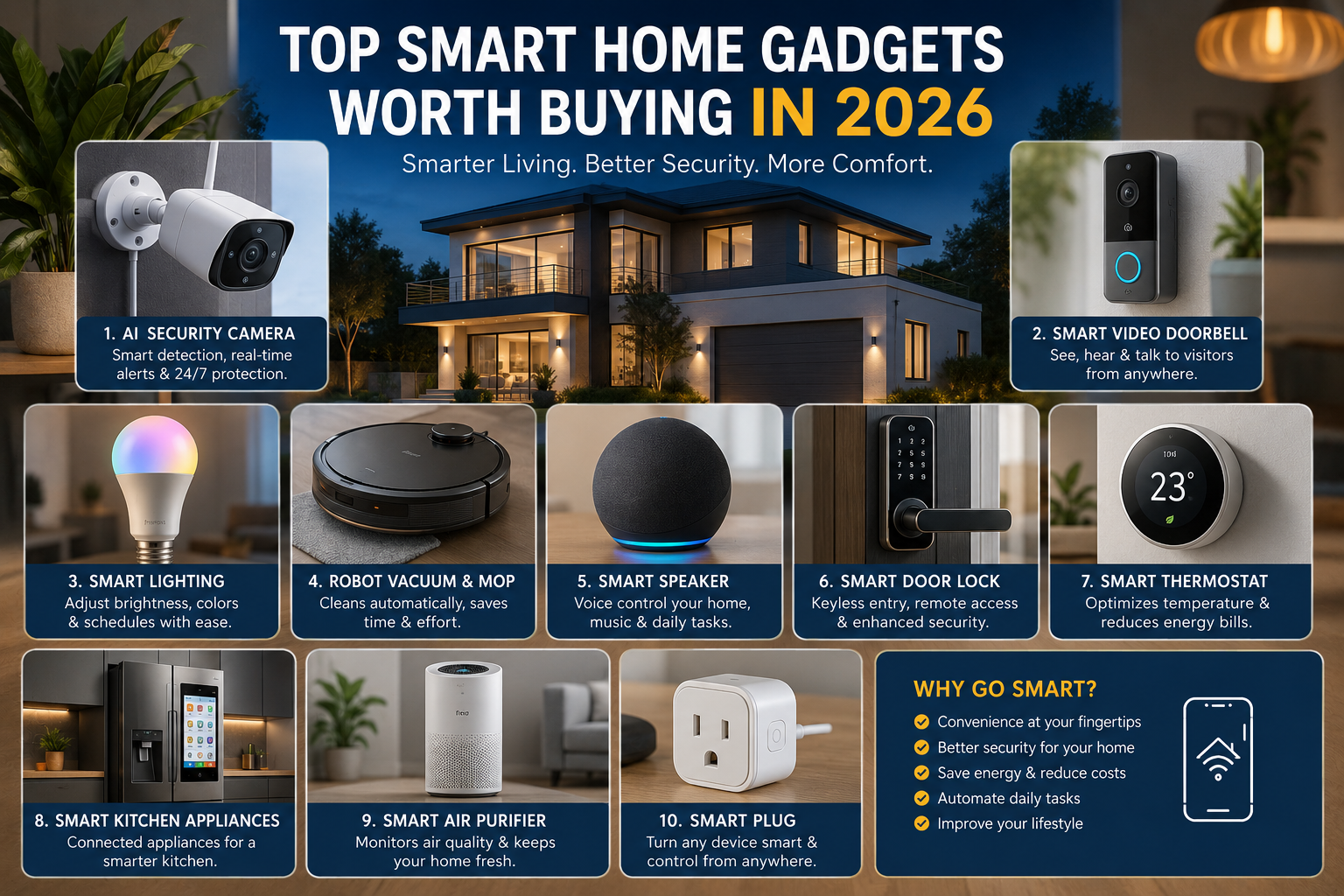
Top Smart Home Gadgets Worth Buying in 2026: The Ultimate Guide to a Smarter Home
Smart home gadgets in 2026 use artificial intelligence and IoT technology to improve home security, convenience, and energy efficiency. The most recommended devices include AI security cameras, smart video doorbells, robot vacuum cleaners, smart speakers, lighting systems, smart locks, thermostats, air purifiers, and connected kitchen appliances. These devices automate daily tasks, reduce energy costs, and create a safer, more connected home environment.
Top Smart Home Gadgets Worth Buying in 2026
Smart homes are no longer a luxury reserved for tech enthusiasts. In 2026, artificial intelligence, voice assistants, and connected devices have made smart home technology more affordable, practical, and user-friendly than ever before. From improving home security to reducing electricity bills and simplifying everyday tasks, smart gadgets are becoming an essential part of modern living.
Whether you’re moving into a new house, renovating your apartment, or simply looking to upgrade your lifestyle, investing in the right smart home devices can make your home safer, more energy-efficient, and significantly more comfortable. The latest generation of smart gadgets uses AI to learn your habits, automate daily routines, and provide real-time control from your smartphone or voice assistant.
If you’re wondering which smart home devices are actually worth buying in 2026, this guide covers the top gadgets that offer the best value, convenience, and long-term benefits.
Why Are Smart Home Gadgets So Popular in 2026?
The rapid growth of artificial intelligence and the Internet of Things (IoT) has transformed how people interact with their homes. Instead of manually switching lights on or checking security cameras while away, homeowners can now automate almost every aspect of their living space.
Smart home technology has also become more compatible across brands, allowing devices such as lights, locks, speakers, cameras, and appliances to work together seamlessly. This connected ecosystem saves time, improves security, and helps homeowners manage energy consumption more efficiently.
As electricity costs continue to rise and remote work becomes more common, people are increasingly investing in technology that enhances convenience while reducing long-term household expenses.
1. AI-Powered Smart Security Cameras
Home security remains one of the biggest reasons homeowners invest in smart technology. Modern AI-powered security cameras can distinguish between people, pets, vehicles, and packages, reducing false alerts and providing more accurate notifications.
Many models now offer facial recognition, night vision, two-way communication, cloud storage, and real-time mobile alerts. Whether you’re at work or on vacation, you can monitor your property directly from your smartphone.
These cameras are particularly useful for protecting entrances, garages, gardens, and driveways while providing peace of mind around the clock.
2. Smart Video Doorbells
Smart video doorbells have become an essential addition to modern homes. They allow homeowners to see, hear, and speak to visitors even when they are away.
In 2026, many smart doorbells include AI-powered package detection, motion alerts, facial recognition, and high-definition video recording. They also integrate with smart locks and security systems, creating a complete entrance security solution.
For online shoppers who frequently receive deliveries, a smart doorbell provides added security and convenience.
3. Smart Lighting Systems
Lighting has evolved far beyond simple on-and-off switches. Smart lighting systems allow homeowners to control brightness, color temperature, and scheduling through voice commands or mobile apps.
You can create different lighting scenes for relaxing, working, watching movies, or entertaining guests. Motion sensors can automatically switch lights on when someone enters a room and turn them off when the room is empty, helping reduce electricity consumption.
Many smart bulbs also synchronize with music, gaming systems, and televisions, creating immersive experiences throughout the home.
4. Robot Vacuum and Mop
Cleaning technology has improved dramatically in recent years. Modern robot vacuums now combine vacuuming and mopping into a single automated device.
Using AI-powered mapping technology, these robots learn the layout of your home, avoid obstacles, detect carpets, and automatically return to their charging stations after completing cleaning tasks.
Busy families, pet owners, and working professionals can maintain cleaner homes with minimal effort.
5. Smart Speakers with AI Assistants
Voice-controlled smart speakers have become the central hub of many smart homes. They can answer questions, play music, manage calendars, control lighting, operate security devices, and automate daily routines using simple voice commands.
Modern AI assistants are becoming more conversational and context-aware, making interactions feel increasingly natural.
With one command, homeowners can switch off every light, lock the doors, and activate nighttime security mode.
6. Smart Door Locks
Traditional keys are gradually being replaced by smart locks that offer keyless entry using smartphones, fingerprints, PIN codes, or temporary digital access.
Homeowners can remotely unlock doors for guests, monitor entry logs, and receive notifications whenever someone enters or leaves the property.
Smart locks are particularly useful for Airbnb hosts, rental properties, and families with children.
7. Smart Thermostats
Energy efficiency is becoming a priority in modern homes. Smart thermostats automatically learn your heating and cooling preferences while adjusting temperatures based on occupancy and weather conditions.
This automation helps reduce electricity consumption without sacrificing comfort.
Many homeowners report noticeable savings on monthly energy bills after installing smart climate control systems.
8. Smart Kitchen Appliances
The kitchen is becoming one of the smartest rooms in the home. Connected coffee makers, refrigerators, ovens, microwaves, and air fryers allow users to control appliances remotely using mobile apps.
Some refrigerators can even monitor food inventory, suggest recipes, and notify homeowners when groceries are running low.
These intelligent appliances save time while making meal preparation more convenient.
9. Smart Air Purifiers
Indoor air quality has become increasingly important, especially in urban environments. Smart air purifiers continuously monitor pollution levels and automatically adjust purification settings based on air quality.
Many devices also track humidity, allergens, and airborne particles while providing detailed reports through smartphone apps.
Families with allergies, pets, or respiratory concerns can benefit significantly from automated air purification systems.
10. Smart Plugs
Smart plugs are one of the simplest and most affordable ways to start building a smart home.
By connecting ordinary appliances to Wi-Fi, smart plugs allow users to schedule devices, monitor electricity usage, and control appliances remotely.
Table lamps, coffee machines, fans, televisions, and decorative lighting can all become smart without replacing existing equipment.
How to Choose the Right Smart Home Gadgets
Before buying smart home devices, consider compatibility with your preferred voice assistant or ecosystem. Choosing products that work together ensures smoother automation and easier control.
It’s also important to prioritize security features, software updates, and reliable customer support. Investing in trusted brands often provides better long-term performance and stronger privacy protection.
Rather than purchasing every gadget at once, start with devices that solve your most immediate needs, such as security cameras, smart lighting, or a robot vacuum. Over time, you can gradually expand your smart home ecosystem.
Final Thoughts
Smart home technology in 2026 is more intelligent, accessible, and practical than ever before. Whether your goal is improving home security, saving energy, automating daily tasks, or simply making life more convenient, today’s smart gadgets offer solutions for every budget and lifestyle.
Instead of viewing smart devices as luxury purchases, many homeowners now see them as long-term investments that improve comfort, efficiency, and peace of mind. By choosing reliable products that integrate seamlessly with your existing devices, you can build a connected home that is ready for the future.
Frequently Asked Questions
The best smart home gadgets include AI security cameras, robot vacuums, smart lighting systems, video doorbells, smart locks, smart speakers, smart thermostats, air purifiers, smart kitchen appliances, and smart plugs.
Yes. Smart home devices improve security, save energy, automate everyday tasks, and make homes more convenient while offering long-term cost savings.
Smart thermostats, smart lighting systems, and smart plugs are among the most effective devices for reducing electricity consumption through automation and scheduling.
Yes. Most modern smart devices support common ecosystems such as Google Home, Amazon Alexa, and Apple Home, allowing them to communicate and automate tasks together.
Smart homes can be secure when users choose trusted brands, enable two-factor authentication, use strong passwords, and regularly install firmware updates.