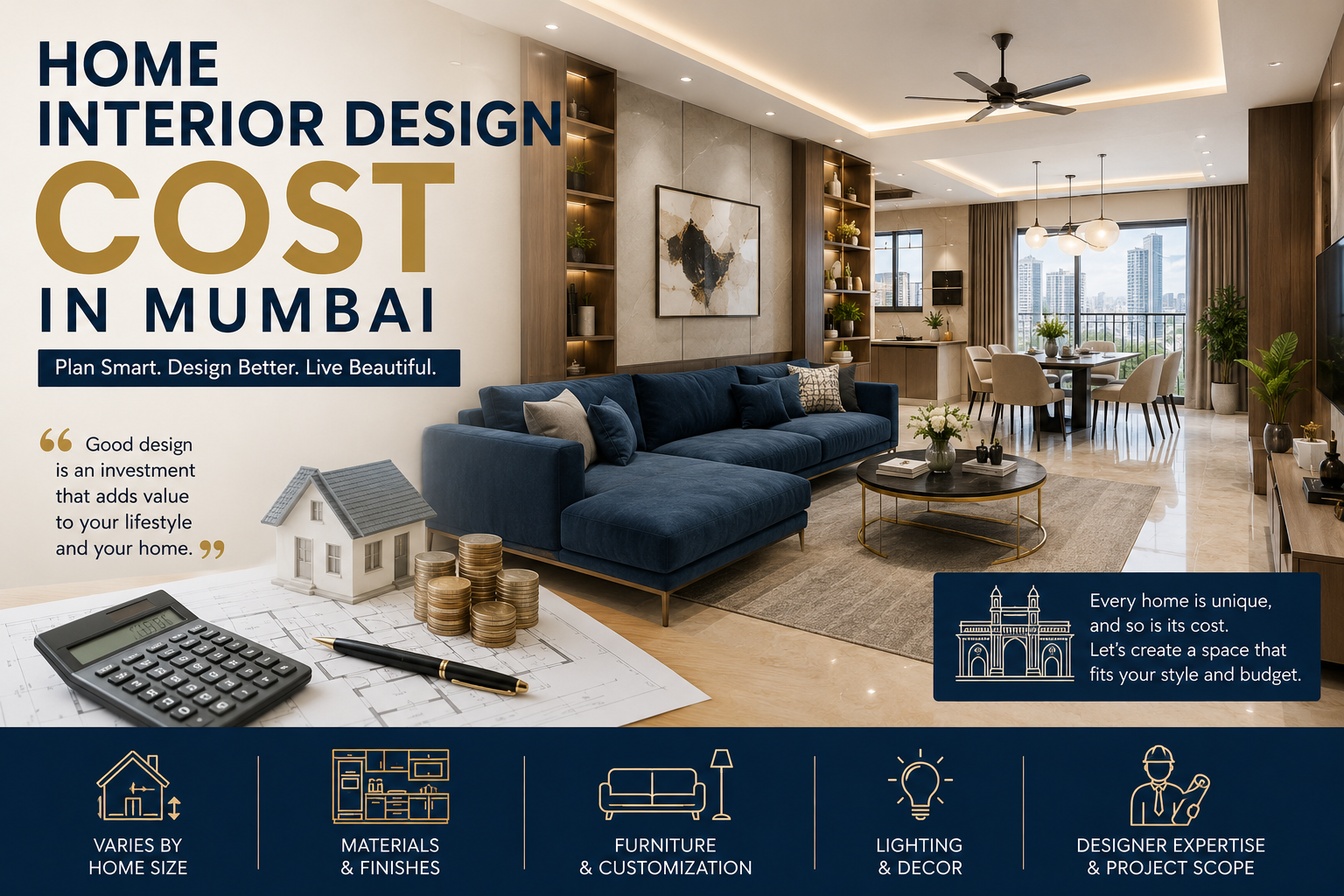
Home Interior Design Cost in Mumbai: Complete Guide for Homeowners in 2026
Mumbai is a city where every square foot matters, and creating a beautiful, functional home has become a priority for homeowners across the city. Whether you own a compact apartment in the suburbs or a luxury residence in South Mumbai, understanding the home interior design cost in Mumbai is one of the most important steps before starting your dream home project.
Interior design is no longer limited to aesthetics. Modern homeowners are investing in thoughtfully designed spaces that improve comfort, maximize storage, and enhance daily living. However, one of the first questions people ask is, “How much does home interior design cost in Mumbai?” The answer depends on several factors, including the size of the property, materials selected, customization requirements, and the overall design theme.
"A home is not just where you live; it is where your lifestyle comes to life."
When planning an interior design project in Mumbai, the cost can vary significantly based on expectations and project scope. A basic interior design package for a 1 BHK apartment may start from ₹3 lakh to ₹5 lakh, while a fully customized premium interior project for a larger home can easily exceed ₹20 lakh. The final investment depends on the quality of materials, furniture, modular solutions, lighting, and design complexity.
One of the biggest factors influencing interior design costs is the level of customization. Ready-made furniture and standard finishes are generally more affordable, whereas custom-made wardrobes, designer furniture, and luxury finishes require a higher budget. Many homeowners today prefer customized interiors because they make better use of available space and create a unique identity for the home.
Mumbai’s real estate landscape has also influenced interior design trends. Since many apartments have limited space, homeowners are increasingly investing in smart storage solutions, modular kitchens, multifunctional furniture, and space-saving designs. These features improve usability and add long-term value to the property.
"Good design is not about spending more money; it is about creating more value from every square foot."
The choice of materials can dramatically impact the overall project cost. Premium materials such as marine plywood, acrylic finishes, quartz countertops, imported tiles, and luxury laminates offer durability and elegance but naturally increase the project budget. On the other hand, homeowners working within a specific budget can choose cost-effective alternatives that still deliver an attractive and functional interior.
Another major component of interior design costs is the modular kitchen. In Mumbai homes, the kitchen is often considered the heart of the house, and homeowners are increasingly investing in modern modular solutions. Depending on size and material specifications, a modular kitchen can account for a significant portion of the overall interior budget. Features such as pull-out storage systems, soft-close drawers, tall units, and built-in appliances add convenience but also contribute to the total cost.
Lighting is another area where costs can vary considerably. Modern interior design goes beyond basic lighting and incorporates layered illumination using ceiling lights, cove lighting, pendant fixtures, and decorative elements. Well-planned lighting not only enhances aesthetics but also influences the mood and functionality of each room.
"Lighting is the silent designer that transforms ordinary spaces into extraordinary experiences."
In recent years, Mumbai homeowners have shown growing interest in luxury interior designs. Premium residences often include designer wardrobes, customized TV units, false ceilings, imported materials, home automation systems, and elegant furniture pieces. These features elevate the overall appearance of the home while increasing the project investment.
For homeowners seeking a balance between affordability and elegance, mid-range interior packages have become increasingly popular. These projects focus on quality materials, functional layouts, and modern aesthetics without excessive spending. Such designs often provide the best value for money and meet the practical needs of urban families.
The expertise of the interior designer also influences project costs. Experienced interior designers bring creative solutions, efficient project management, and professional execution. While hiring an established design firm may require a higher initial investment, it often helps avoid costly mistakes and ensures a smoother project experience.
"An experienced interior designer doesn't add cost to a project; they add clarity, efficiency, and long-term value."
One important aspect that homeowners should not overlook is future maintenance. Choosing durable materials and timeless designs can reduce repair and replacement expenses over time. While budget-friendly options may seem attractive initially, investing in quality often proves more economical in the long run.
As we move into 2026, interior design trends in Mumbai are increasingly focused on minimalism, sustainability, multifunctional spaces, and personalized designs. Homeowners are prioritizing practicality alongside aesthetics, creating homes that reflect both style and functionality. Smart homes, eco-friendly materials, and customized storage solutions continue to shape the future of residential interiors.
Ultimately, there is no one-size-fits-all answer to the cost of home interior design in Mumbai. Every project is unique, and the final budget depends on individual preferences, lifestyle requirements, and design aspirations. The key is to define your priorities clearly and work with professionals who can transform your vision into reality while respecting your budget.
"An experienced interior designer doesn't add cost to a project; they add clarity, efficiency, and long-term value."
Frequently Asked Questions
The cost typically ranges from ₹3 lakh for basic interiors to ₹20 lakh or more for premium customized projects.
Property size, material selection, customization, furniture, modular kitchen requirements, lighting, and designer expertise all influence the final budget.
Yes. A professional designer can optimize space, improve functionality, manage execution, and help avoid expensive mistakes.
Choosing practical materials, focusing on essential areas, and prioritizing functionality over excessive customization can help manage costs effectively.
Minimalist designs, smart storage solutions, sustainable materials, modular kitchens, and multifunctional furniture are among the most popular trends.